
Last Updated: October 25, 2026
Quick Summary
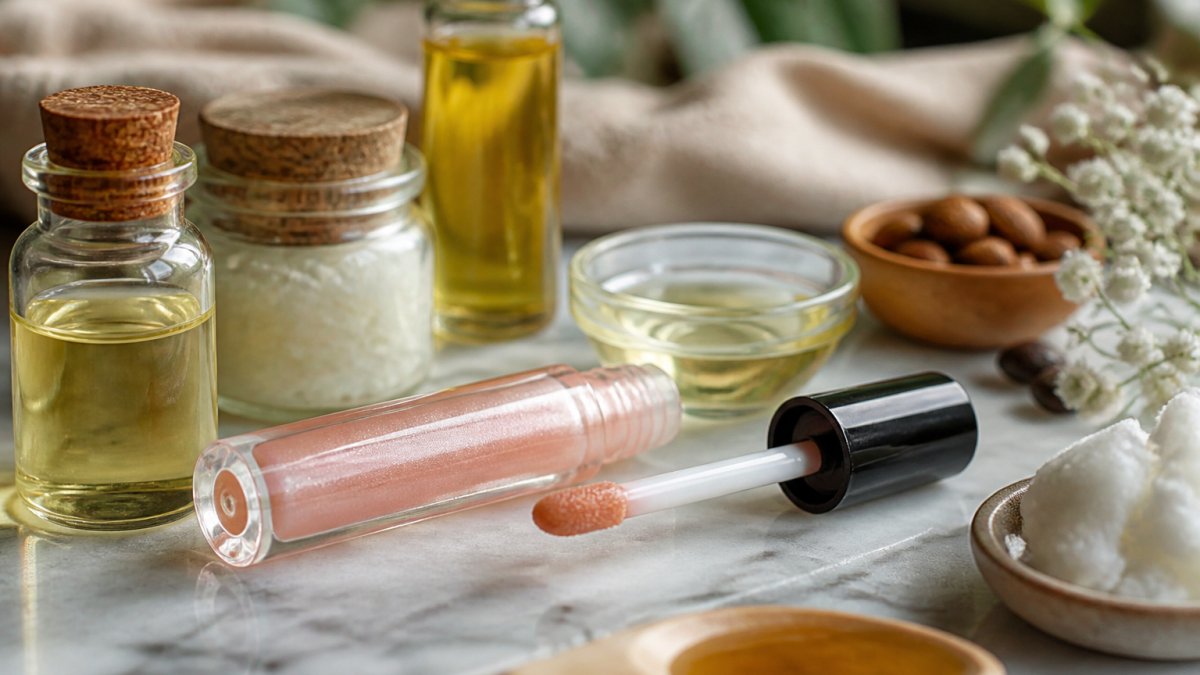
Natural oils lip gloss conditions lips while delivering shine, because lips have no oil glands of their own and rely on what you apply. Carrier oils such as jojoba, argan, and sweet almond replenish the surface layer and slow moisture loss, so lips feel soft instead of tight and dry.
- Jojoba oil resembles human sebum, so it absorbs readily and adds non-tacky slip.
- Sweet almond oil is nut-derived, so anyone with a tree-nut allergy should avoid it.
- Compare the first three to five ingredients: the oil listed first is what you feel most.
- Patch test new products on the inner arm for a day before applying to lips.
- Apply gloss in thin layers over blotted balm to avoid a sticky finish.
Table of Contents
- Why Natural Oils in Lip Gloss Matter for Daily Wear
- Lip Oil vs Lip Gloss: What's the Real Difference?
- The Best Oils for Lips and What Each One Does
- Natural Lip Gloss Ingredients: Reading the Label Like a Pro
- Lip Gloss for Dry Lips: How Oils Lock In Moisture Without Stickiness
- Sensitive Lips, Allergies, and the Limits of Oil-Based Gloss
- Choosing Your Nourishing High-Shine Gloss
- Frequently Asked Questions
Why Natural Oils in Lip Gloss Matter for Daily Wear
The benefits of natural oils lip gloss delivers come down to comfort that lasts past your morning coffee.
Lips have no oil glands of their own, which explains most of what goes wrong with long-wear lip products.
In practice, an oil-based gloss feels lightweight, moves with your lips, and layers easily over balm or liner.
Below, we break down which oils do what, how to read a label without a chemistry degree, and where oil-based gloss stops working.
Lip Oil vs Lip Gloss: What's the Real Difference?
In practice, the line blurs constantly. Many products marketed as lip oils are glosses with a few oils added, and many modern glosses are oil-forward formulas.
Three distinctions actually matter when you are choosing:
- Finish. Oils give a wet, mirror-like shine with very little pigment. Glosses range from clear to opaque and can be shimmery or matte.
- Wear time. Oil-based formulas tend to transfer and fade faster. Wax and polymer glosses grip longer but can feel tackier.
- Treatment. A true lip oil is doing skincare work. A gloss is doing cosmetic work, sometimes with skincare benefits added.
Where does lip balm fit? Balm is the treatment-first category, usually thicker and often matte. If your lips are cracked, balm first. If you want shine with conditioning, an oil-based gloss is the middle ground.
The Best Oils for Lips and What Each One Does
No single oil does everything. The best formulas blend several because each brings a different weight, feel, and function to the finish.
Jojoba and Coconut Oil: The Hydration Workhorses
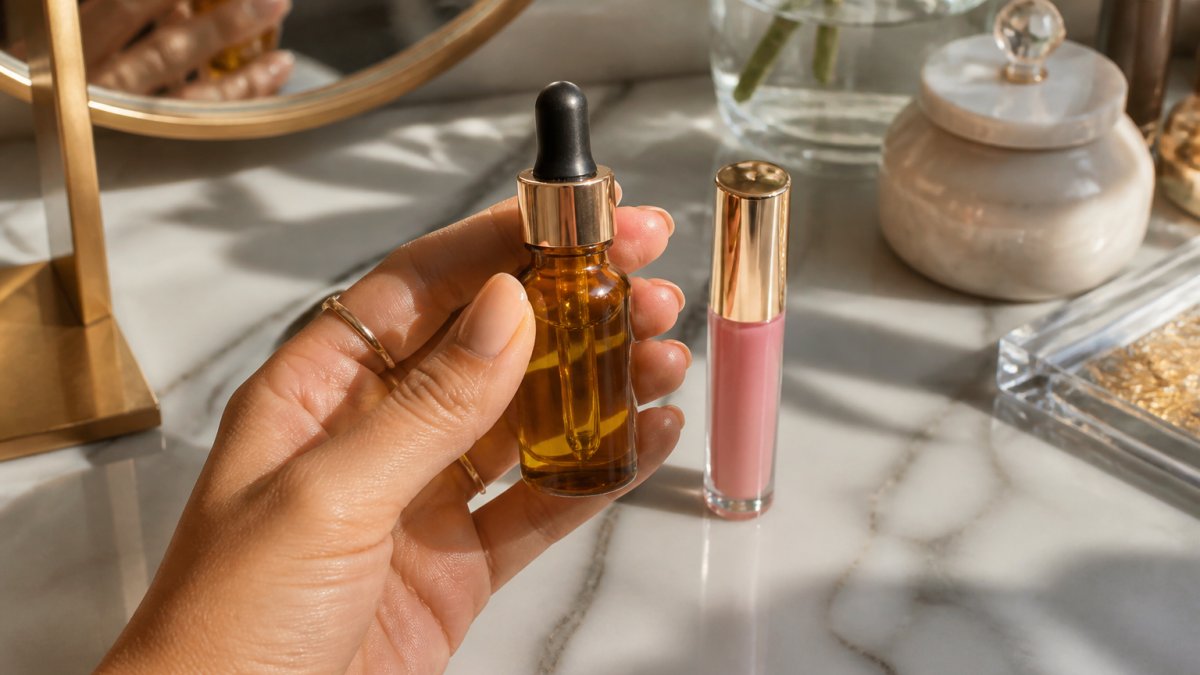
Jojoba oil is technically a liquid wax ester, and its structure closely resembles human sebum, so it absorbs readily and feels less greasy than heavier oils. In a gloss, jojoba adds slip and a soft, non-tacky cushion.
Coconut oil is the more polarising one. It conditions well and gives immediate softness, but it can feel heavy and, for some people, clog-prone or irritating on reactive skin.
Argan, Sweet Almond, and Grapeseed: Lightweight Nourishment
Argan oil is rich in vitamin E and fatty acids, and it brings a silky finish without weight. Sweet almond oil is a gentle, mid-weight emollient that suits most skin types and helps lips feel smooth quickly; because it is nut-derived, anyone with a tree-nut allergy should avoid it or confirm with a clinician. Grapeseed oil is the lightest of the three, useful when you want shine without any heaviness.
A Quick Comparison by Texture and Use Case
| Oil | Texture in gloss | Likely benefit | Watch-outs |
|---|---|---|---|
| Jojoba | Light, silky, non-tacky | Slip and cushion; resembles sebum | Rare sensitivity |
| Coconut | Rich, heavier | Immediate softness | Can feel heavy; possible irritation on reactive skin |
| Argan | Silky, medium weight | Vitamin E and fatty acids; smooth finish | Generally well tolerated |
| Sweet almond | Mid-weight, gentle | Quick smoothing | Nut-derived; avoid with tree-nut allergy |
| Grapeseed | Very light | Shine without weight | Generally well tolerated |
| Castor | Thick, glossy, grippy | Shine and cling | Can feel tacky in high amounts |
| Avocado | Rich, heavy | Richness for very dry-feeling lips | Heavier feel; may not suit oily or reactive skin |
Other oils on labels include avocado oil for richness, castor oil for gloss and grip, mango seed oil for a thicker cushion, and aloe vera for a cooling feel. Essential oils add scent but are a common source of irritation, so a fragrance-free formula is safer for daily wear. Carrier oils condition; essential oils are volatile and warrant more caution, especially near the mouth.
How Oils Actually Work on Lips
It helps to separate three effects that get blurred together in marketing. Emollients soften and smooth the surface, which is why lips feel better immediately after application. Occlusives form a lightweight barrier that slows water loss. Humectants attract water, but most pure carrier oils are not strong humectants, so they do not "add" water the way glycerin might. A good gloss often combines an emollient oil with a modest occlusive film former, which is why it feels comfortable without being heavy.
Allergy, Irritation, and Safe Use
Oil-based does not mean risk-free. Fragrance components, essential oils, and some plant extracts are common irritants in lip products. Patch test new products on the inner arm for a day before applying to lips, especially if you have reacted before. If you develop stinging, peeling, or swelling, stop using the product and speak to a pharmacist or doctor. Nut-derived oils such as sweet almond deserve extra caution for anyone with a tree-nut allergy.
Natural Lip Gloss Ingredients: Reading the Label Like a Pro
Ingredients are listed by weight, largest first. If jojoba or argan appears in the first three or four ingredients, the formula is genuinely oil-based. If the oils sit near the bottom, after the waxes, polymers, and pigments, you are looking at a conventional gloss with a marketing story attached.
Here is how we would scan a label:
- Top of the list: carrier oils, waxes, and the base. This is what the product actually is.
- Middle: pigments, pearlisers, and texture modifiers.
- Bottom: preservatives, antioxidants, fragrance, and anything under roughly one percent.
- Watch for: "fragrance" or "parfum" if your lips react easily, and alcohol high in the list, which can feel drying over time.
Carrier Oils vs Essential Oils
This is the distinction most shoppers miss. Carrier oils, jojoba, argan, sweet almond, grapeseed, castor, avocado, are the base of the formula, used in meaningful amounts and doing the conditioning work. Essential oils, peppermint, lavender, citrus, and others, are volatile aromatic compounds used for scent or a tingle. They appear in much smaller amounts, often near the bottom of the list, and are a common source of irritation on lips.
What "Natural," "Organic," and "Non-Comedogenic" Actually Mean
These terms are not regulated the same way across markets, and they do not guarantee a product will suit you. "Natural" generally means ingredients derived from plants or minerals, but says nothing about irritation risk. "Organic" usually refers to how an ingredient was grown or processed, and may apply to only some ingredients. "Non-comedogenic" is a claim about not clogging pores, but lips do not have pores the way facial skin does, so it is less meaningful for a lip product.
Formulation Transparency: What to Ask Before You Buy
Three questions cut through most marketing. First, which carrier oil is listed first, and does that match the feel you want? Second, is there fragrance or essential oil, and where does it sit in the list? Third, does the formula pair oils with a modest occlusive or film former, which affects how long shine and comfort last? A gloss that is mostly oils with no film former feels lovely and fades quickly; one with a light polymer holds longer but may feel slightly tackier.
Lip Gloss for Dry Lips: How Oils Lock In Moisture Without Stickiness
Oil does not add water to your lips. It slows water from leaving them. That distinction is why the application method matters as much as the formula.
The trick to a non-sticky, comfortable finish is thin layers over prepped lips:
- Gently buff away flaking skin, then apply a light balm and let it settle for a minute.
- Blot any excess so the gloss has a smooth base to grip.
- Apply the gloss in a thin layer, starting at the centre of the lower lip and pressing your lips together.
- Add a second thin layer only where you want extra shine, not across the whole lip.
A common mistake is applying gloss to dry, flaky lips and expecting it to smooth them. If stickiness is your main frustration, our guide on how to stop lip gloss from feeling sticky covers prep and blotting in more detail.
Sensitive Lips, Allergies, and the Limits of Oil-Based Gloss
Oil-based gloss is not automatically gentle. Some of the most common irritants in lip products are botanical: fragrance components, essential oils, and certain plant extracts.
Patch testing is the simple safeguard. Our guide to safe lip gloss for sensitive skin walks through the ingredients worth avoiding.
Here is the honest limit of oil-based lip care. Oils condition the surface and slow moisture loss, but they cannot repair cracked lips on their own, and they will not fix a reaction already underway.
Choosing Your Nourishing High-Shine Gloss
The right gloss comes down to three questions: how much colour you want, how long you need it to last, and how reactive your lips are. Answer those honestly and the ingredient list sorts itself out.
For everyday wear, we would choose a natural oils lip gloss with jojoba or argan near the top, no added fragrance, and a finish that layers well over balm. If you are ready to choose, you can shop the Maison for our glosses and feather-light lashes, or read our guide on buying a nourishing high-shine lip gloss that matches your criteria.
Frequently Asked Questions
What are the benefits of natural oils in lip gloss?
Natural oils in lip gloss do three jobs at once. They soften dry, flaky skin, they slow moisture loss by forming a light barrier on the lip surface, and they give the gloss its slip and shine. Jojoba, coconut, argan, and sweet almond oil are the most common choices. The result is a gloss that feels comfortable for hours instead of drying out and turning tacky by midday.
Is lip oil better than lip gloss for dry lips?
It depends on the formula, not the label. A lip oil is usually a thin blend of carrier oils with little or no wax, so it sinks in fast and adds shine. A gloss often includes waxes or polymers for longer wear and more color. For very dry lips, look for a gloss built on jojoba or argan oil with a lightweight, non-sticky finish. Either type works if the oil content is high and the formula avoids drying ingredients like menthol or heavy fragrance.
Can natural oils make lip gloss feel less sticky?
Yes, when the oil blend is balanced well. Oils like grapeseed and sweet almond are light and spread easily, which reduces the tacky drag you get from wax-heavy or sugar-based formulas. The trade-off is that very oily glosses need reapplying more often. A good formula pairs light oils with just enough wax or butter to hold shine without the sticky feel.
Can natural oils in lip gloss irritate sensitive lips?
They can. Essential oils such as peppermint, cinnamon, and citrus are common culprits, and so are added fragrances. Carrier oils like jojoba and coconut are usually gentler, but coconut oil can clog pores around the lip line for some people. If your lips react easily, patch test on the inner arm first and choose short ingredient lists with no added scent. Stop using any gloss that causes tingling, redness, or peeling.
Most glosses ask you to choose between shine and comfort. We do not think you should have to. Lauren Lux Beauty™ formulates each small, considered edition to nourish the lips and deliver a high-shine finish without the tacky feel, so your gloss works from your morning routine through to candlelight. Explore the collection and find the shade that becomes part of your daily ritual. Shop now and experience effortless everyday luxe.
