
Table of Contents
- What to Look for When You Buy Nourishing High Shine Lip Gloss
- Best Ingredients for Nourishing Lip Gloss
- Why Non-Sticky Hydrating Lip Gloss Matters for All-Day Comfort
- How to Apply Lip Gloss for Maximum Shine
- Color Payoff, Plumping, and Long-Lasting Wear
- Pricing, Packaging, and Sustainability: What Your Money Buys
- Conclusion
- Frequently Asked Questions
Last Updated: September 30, 2026
What to Look for When You Buy Nourishing High Shine Lip Gloss
If you want to buy nourishing high shine lip gloss that actually earns its place in your bag, start with three things: finish, texture, and wear time. A gloss can look mirror-bright in the tube and still leave your lips feeling coated and tacky an hour later. At Lauren Lux Beauty™, we believe these factors are key to a gloss you reach for daily.
Finish, Texture, and Wear Time
Finish describes the surface look: sheer, satin, or full mirror shine. Texture covers how the formula sits on your lips, whether it feels lightweight or heavy, smooth or grainy. Wear time is how long the look holds before it fades or settles into lip lines.
The Non-Sticky Test
The simplest test is the back-of-hand swipe. Apply a small amount, wait thirty seconds, then press your lips together. If they stick or drag, the formula is too tacky for all-day wear. A non-sticky gloss should glide, feel cushioned, and leave a sheen rather than a film.
Best Ingredients for Nourishing Lip Gloss
The best ingredients for nourishing lip gloss fall into two functional groups: emollients that soften and seal in moisture, and humectants that draw water into the upper layers of the lip skin. Lips have no sebaceous glands, so they cannot moisturize themselves, every bit of hydration and barrier protection has to come from the formula. That is why ingredient selection matters more for lip gloss than for almost any other cosmetic category.
Emollients, Oils, and Humectants That Actually Condition
Emollients are the workhorses of any lip care formula. They fill the tiny gaps in dry lip texture so light reflects more evenly, which is exactly what creates that glass-like shine. Humectants pull water from the air and from deeper skin layers to keep the surface plump. A well-built nourishing gloss pairs both. Look for:
- Hyaluronic acid, a humectant that holds up to 1,000 times its weight in water, drawing moisture to the lip surface for immediate plumping and smoothness.
- Vitamin E (tocopherol), an antioxidant that supports the lipid barrier and helps prevent the formula from oxidizing in the tube, extending shelf life.
- Maracuja oil, a lightweight, non-greasy emollient rich in linoleic acid that helps a formula spread evenly without heaviness.
- Shea butter, a rich emollient that provides cushion and occlusive protection; best used in small amounts so the gloss does not feel waxy.
- Jojoba oil, structurally similar to human sebum, so it absorbs quickly and conditions without leaving a heavy film.
- Squalane, a lightweight, non-comedogenic emollient that mimics the skin's own lipids and helps restore softness.
What to Avoid: Ingredient Safety and Toxicology
A few ingredient categories deserve extra scrutiny:
- Drying alcohols (denatured alcohol, SD alcohol, isopropyl alcohol), these can strip the lip barrier and make dryness worse over time. They are common in long-wear or matte formulas but rarely necessary in a nourishing gloss.
- Synthetic fragrance and flavor, fragrance is one of the most common causes of contact irritation on lips. If your lips react easily, choose fragrance-free or naturally flavored options.
- Petroleum-derived occlusives (petrolatum, mineral oil), these seal in moisture but do not add any; they can be fine for barrier protection but are not nourishing on their own.
- Heavy silicones (dimethicone, cyclopentasiloxane), these create slip and shine but can trap debris and cause dryness for some users. Lightweight silicones are generally well-tolerated; heavy ones may feel suffocating.
For a deeper dive into ingredient safety assessments, the Cosmetic Ingredient Review assessments on cosmetic safety offers independent evaluations of common cosmetic ingredients, including many used in lip products.
Why Non-Sticky Hydrating Lip Gloss Matters for All-Day Comfort
A non-sticky hydrating lip gloss is the difference between reapplying out of necessity and reapplying out of choice. Sticky formulas collect hair, cling to dry patches, and feel heavier as the day goes on. Lightweight formulas stay comfortable from a morning commute through an evening event.
How to Apply Lip Gloss for Maximum Shine
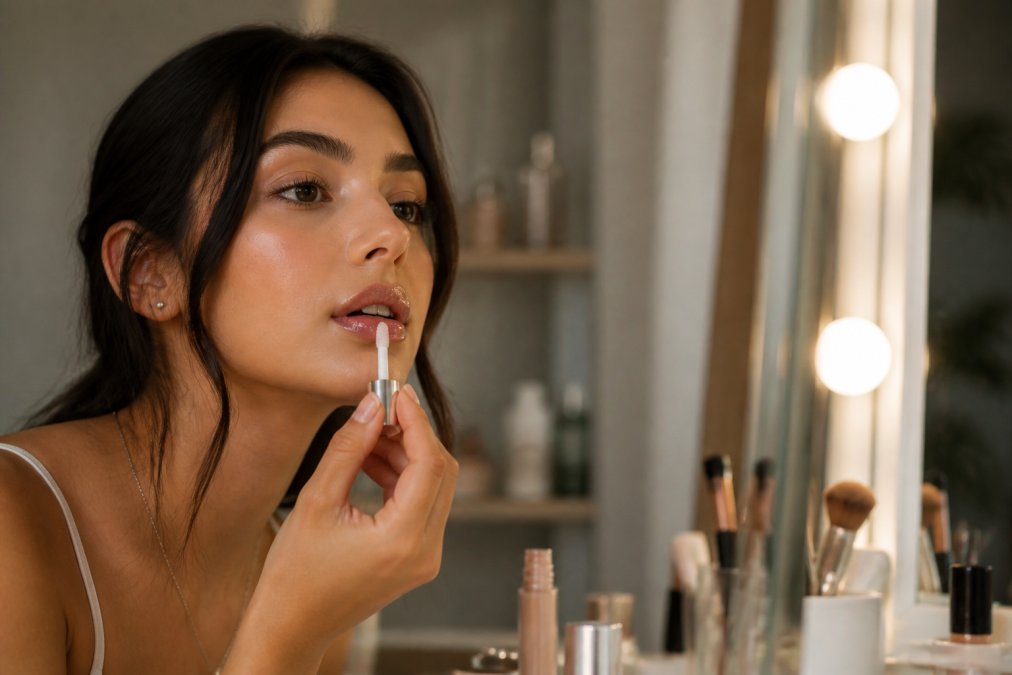
To get maximum shine, prep first, then build in thin layers. Start with smooth, lightly hydrated lips. Exfoliate gently if needed, apply a thin balm layer, then add gloss with a doe-foot applicator, working from the center outward. Press your lips together once, not repeatedly, to avoid breaking the shine.
Layering Techniques for a Glass-Like Finish
Layering is where most people leave shine on the table. A lip combo built in three thin passes reflects more light than one heavy coat. Try this order:
- Balm or lip care base, blotted lightly
- Sheer color or liner for definition
- Gloss applied in two thin layers, center outward
- A final dot at the center of the lower lip for a plump-looking highlight
Matching Sheen to Your Skin Tone and Undertone
Undertone decides which gloss flatters you, not skin depth alone. Warm undertones suit peach, coral, and golden nudes. Cool undertones pair well with rose, berry, and mauve. Neutral undertones can wear almost anything, which is why a sheer, buildable shade is the safest first buy. If you are shopping online and cannot swatch, choose a gloss with buildable shine so you can control the intensity.
Color Payoff, Plumping, and Long-Lasting Wear
Color payoff ranges from sheer to fully pigmented, and neither is better, only different. Sheer color gives a juicy lips effect that reads polished but understated. Pigmented formulas deliver more coverage and work well over a liner. Plumping effects usually come from ingredients that draw water to the surface, creating a temporarily fuller, plump-looking result rather than lasting volume.
| Priority | What It Means | Best For |
|---|---|---|
| Cushioned comfort | Lightweight, hydrating base | All-day office wear |
| Full mirror shine | High-reflectance finish | Evening and events |
| Buildable color | Sheer to pigmented in layers | First-time online buyers |
| Long wear | Fewer reapplications | Long days, travel |
Pricing, Packaging, and Sustainability: What Your Money Buys
Price in lip gloss often tracks formula quality, packaging, and batch size. Small-batch, curated editions can cost more per unit due to lower production volumes and tighter quality control. A gloss made with premium ingredients like cold-pressed maracuja oil and hyaluronic acid typically costs more to produce than one built on more common alternatives.
What Drives the Cost of a Nourishing High Shine Lip Gloss
- Ingredient sourcing, cold-pressed oils, fair-trade shea, and clinically studied humectants cost more than commodity fillers. A formula with a higher concentration of key ingredients can differ from one with a trace amount.
- Manufacturing method, small-batch production allows for tighter quality control but lacks the economies of scale that mass production enjoys. Expect a higher per-unit cost.
- Packaging components, a weighted, refillable, or reusable case protects the formula and is more likely to survive a handbag. Lighter plastic tubes cost less but crack and scuff faster.
- Testing and certification, dermatologist-tested, cruelty-free, and vegan certifications require third-party audits and fees that add to the final price.
Sustainability and Packaging: The Angle Most Brands Ignore
If sustainability matters to you, look for:
- Refillable or reusable cases, some brands now offer gloss compacts where you buy the formula once and refill the inner pan, cutting plastic waste by up to 70% over the product's life.
- Recyclable or biodegradable components, a growing number of brands use aluminum, glass, or plant-based bioplastics that can be recycled or composted.
- Concentrated formulas, a thicker, more pigmented gloss requires less product per application, so a single tube lasts longer and generates less waste per use.
- Brand transparency, look for companies that publish their packaging materials, recycling instructions, and sustainability reports. Vague claims like "eco-friendly" without specifics are a red flag.
Sustainable packaging often costs more upfront.
Because pricing depends on formula, finish, and edition size, check Lauren Lux Beauty™ directly for current pricing rather than assuming a figure.
Conclusion
Choosing well comes down to matching formula to your actual day, not to a swatch photo. Nourishing ingredients, a non-sticky texture, and buildable shine matter more than a single dramatic shade. Lauren Lux Beauty™ formulates mirror-bright glosses that nourish, never sticky, with lightweight comfort for all-day wear and signature packaging worth keeping. Shop Lauren Lux Beauty™ to find a gloss that turns your daily routine into a quiet, intentional ritual.
Frequently Asked Questions
What is the best lip gloss with high shine?
The best high shine lip gloss combines a mirror-bright finish with a lightweight formula that does not feel heavy by midday. Look for glosses built on nourishing oils like maracuja oil, plus hyaluronic acid and vitamin E for comfort. A quality high shine lip gloss should deliver buildable shine, a smooth texture, and a non-sticky feel that lasts through a workday.
What ingredients make a lip gloss nourishing?
The best ingredients for nourishing lip gloss are emollients and oils that condition the lips rather than just coat them. Maracuja oil, jojoba, and shea butter soften and seal in moisture, while hyaluronic acid draws in hydration and vitamin E supports the skin barrier. Avoid formulas heavy in drying alcohols or synthetic fragrance if you have sensitive skin. A nourishing gloss should feel comfortable for hours, not just glossy for ten minutes.
How can I tell if a lip gloss is non-sticky?
Test a non-sticky hydrating lip gloss on the back of your hand and press your lips together. If they stick or drag, the formula is too tacky. A good non-sticky formula glides on, feels lightweight, and lets your lips move freely without pulling. Ingredients like lightweight oils and emollients keep the texture smooth rather than gummy. Reading reviews for terms like 'weightless' and 'non-tacky' also helps before you buy.
How do I achieve a mirror-bright finish with lip gloss?
Start with smooth, exfoliated lips so light reflects evenly. Apply a thin layer of gloss to the center of your lower lip, then press your lips together and add a second layer for buildable shine. For extra luster, dab a dot on the cupid's bow. Layering over a sheer lip liner or lip balm hybrid keeps the color in place. A pigmented, high shine lip gloss with a smooth texture gives the cleanest glass-like shine.