
Table of Contents
- What Causes Lip Irritation and Sensitivity
- Ingredients to Avoid in Lip Gloss for Sensitive Skin
- Key Ingredients That Protect Sensitive Lips
- How to Treat Chapped Sensitive Lips
- Choosing Safe Lip Gloss: What Dermatologists Recommend
- Hypoallergenic Lip Gloss Brands and Formulation Standards
- Building Your Sensitive-Skin Lip Care Routine
- Frequently Asked Questions
Last Updated: October 2, 2026
What Causes Lip Irritation and Sensitivity
Lip irritation stems from biological and environmental factors. The lips lack oil glands and have thinner stratum corneum than the rest of your face, so they lose moisture faster and absorb irritants more readily. When the skin barrier weakens, irritants penetrate easily, triggering inflammation.
Common culprits include fragrances, essential oils, certain preservatives, and synthetic dyes, all of which can trigger contact dermatitis in sensitive individuals. Environmental triggers like cold weather, low humidity, wind exposure, and even frequent lip licking accelerate moisture loss. Dehydration compounds the problem, as does exposure to UV rays without protection.
Many people don't realize their lip sensitivity stems from daily products. Lip glosses with heavy waxes or silicones can trap bacteria and worsen irritation, which is why safe lip gloss for sensitive skin prioritizes lightweight formulations. The goal is to choose formulations that support your skin barrier rather than compromise it.
Ingredients to Avoid in Lip Gloss for Sensitive Skin
The most common culprits in conventional lip glosses are fragrance compounds, synthetic dyes, and certain preservatives. Understanding why these ingredients trigger reactions helps you read labels with confidence.
Fragrance and Fragrance Compounds
Fragrance is the leading cause of allergic contact dermatitis in lip products. The term "fragrance" can mask dozens of undisclosed compounds. Even "natural" essential oils like lavender and peppermint contain volatile compounds that penetrate the thin lip barrier. Limonene and linalool are known contact allergens that accumulate in sensitive skin over repeated exposure.
Synthetic Dyes and Colorants
FD&C Yellow 5, FD&C Red 40, and FD&C Blue 1 are synthetic azo dyes that can cause contact dermatitis, particularly in individuals with aspirin sensitivity. Natural colorants like carmine are common allergens in people with shellfish sensitivity.
Preservative Systems
Parabens are known contact sensitizers in susceptible individuals. Phenoxyethanol triggers sensitivity in 1-3% of the population. Imidazolidinyl urea and DMDM hydantoin are formaldehyde-releasing preservatives that create cumulative irritant effects.
Emollients and Occlusive Agents
Heavy silicones like dimethicone create waxy buildup that traps bacteria and prevents natural transpiration. Petroleum-derived waxes lack breathability and can create dependency, lips feel dry without the product because the barrier isn't being repaired, only temporarily sealed.
Drying and Irritating Agents
Alcohol strips natural oils and disrupts the skin barrier. Menthol and camphor create paradoxical irritation, they trigger cooling sensations without providing hydration. Salicylic acid and glycolic acid are too harsh for sensitive lips.
Quick Reference: Chemical Names to Avoid
| Chemical Name | Common Label Term | Why It's Problematic |
|---|---|---|
| Limonene, linalool, geraniol | "Natural fragrance," essential oils | Contact allergens; volatile compounds penetrate thin lip barrier |
| FD&C Yellow 5, FD&C Red 40 | Synthetic dyes, azo dyes | Petroleum-derived; trigger delayed hypersensitivity in sensitive skin |
| Methylparaben, propylparaben | Parabens | Known contact sensitizers; accumulate in tissue over time |
| Phenoxyethanol | Preservative | Triggers sensitivity in 1-3% of population; less regulated than parabens |
| Imidazolidinyl urea, DMDM hydantoin | Formaldehyde-releasing preservatives | Release formaldehyde as product ages; cumulative irritant effect |
| Dimethicone, cyclopentasiloxane | Silicones | Create waxy buildup; trap bacteria; prevent natural transpiration |
| Ethanol, isopropyl alcohol | Alcohol | Strips natural oils; disrupts skin barrier; worsens water loss |
| Menthol, camphor | Cooling agents | Paradoxical irritation; damage stratum corneum despite cooling sensation |
Key Ingredients That Protect Sensitive Lips
The best formulations prioritize humectants, emollients, and occlusives. Hyaluronic acid draws moisture into the skin and holds it there. Glycerin performs a similar function and has been used safely for decades.
Ceramides are essential for sensitive skin because they reinforce the skin barrier itself. These lipid molecules fill gaps in the stratum corneum and prevent transepidermal water loss. Shea butter provides both emollient and occlusive benefits without the heaviness of synthetic waxes, and it contains natural fatty acids that mimic your skin's own lipid profile.
Botanical extracts like chamomile and centella asiatica offer soothing properties without the irritation risk of essential oils. Natural waxes like beeswax create a protective seal while allowing the skin to breathe.
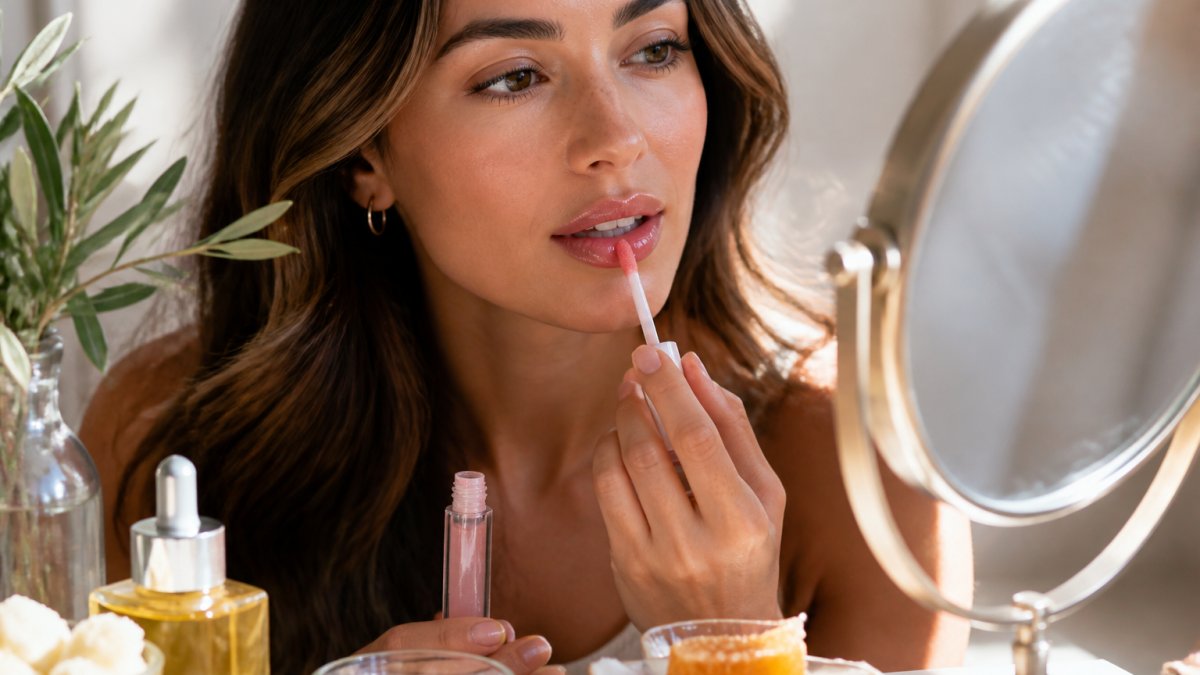
Look for products labeled hypoallergenic, dermatologist-tested, and fragrance-free. These exclude known irritants and won't trap bacteria.
How to Treat Chapped Sensitive Lips
Chapped lips require a three-phase treatment strategy: acute relief, barrier repair, and trigger identification.
Phase 1: Acute Relief (First 24-48 Hours)
Start with a gentle lip balm containing hyaluronic acid and ceramides, applied every 2-3 hours. Apply to damp lips immediately after drinking water to trap moisture in the tissue.
Avoid licking your lips, which removes protective oils. If you have a habit of lip licking, apply a thick balm before bed and wear a lip mask overnight.
Do not use lip scrubs, exfoliating products, or mechanical tools on chapped lips. The mechanical abrasion removes the healing layer of skin and triggers a rebound inflammatory response. Wait until your lips are fully healed (typically 5-7 days of consistent care) before any gentle exfoliation.
Phase 2: Barrier Repair (Days 3-7)
At night, upgrade to an intensive lip mask with occlusive ingredients like shea butter or beeswax. Apply generously before sleep. Most people see improvement within 48-72 hours.
During the day, reapply your hydrating balm every 2-3 hours, particularly after eating, drinking, or speaking for extended periods. Each of these activities removes the protective layer and exposes the healing tissue to air and irritants. Consistency matters more than product switching, stick with the same formulation for at least one week before evaluating whether it's working.
If chapping persists beyond 7 days despite consistent care, move to Phase 3 and investigate environmental and lifestyle triggers.
Phase 3: Identifying and Managing Environmental Triggers
Weather and Humidity
Cold, dry air accelerates moisture loss. Use a humidifier to maintain humidity above 40% and increase water intake during dry seasons.
Wind exposure combines low humidity with mechanical stress. Apply a protective balm before outdoor exposure and reapply after coming indoors.
Mask-Wearing and Occlusion
Prolonged mask-wearing creates friction that removes protective oils and traps moisture, accelerating bacterial growth.
If you wear masks regularly, apply a lightweight, fragrance-free balm before putting on the mask.
Dietary and Hydration Factors
Behavioral Triggers
Patch Testing Before Reintroducing Products
- Select a test location: The inside of your wrist or behind your ear has similar skin sensitivity to your lips but is less visible if a reaction occurs.
- Apply a small amount: Use a clean applicator (not your finger) to apply a pea-sized amount of the product to the test area.
- Wait 24 hours: Do not wash the area or apply other products. Observe for redness, swelling, itching, or burning.
- Evaluate the result: If no reaction occurs after 24 hours, the product is likely safe for your lips. If any irritation develops, do not use the product on your lips.
- Apply to lips cautiously: If the patch test is clear, apply a small amount to the corner of your mouth first, wait 2 hours, then apply to your full lips if no reaction occurs.
Choosing Safe Lip Gloss: What Dermatologists Recommend
To find safe lip gloss for sensitive skin, start by reading the full ingredient list, not just marketing claims. "Natural" doesn't mean safe for sensitive skin. "Hypoallergenic" indicates the product was formulated to minimize allergens, but no product is truly hypoallergenic for everyone.
Hypoallergenic Lip Gloss Brands and Formulation Standards
Hypoallergenic formulations exclude fragrance, parabens, sulfates, and synthetic dyes. Look for third-party certifications or dermatologist-tested claims.
Building Your Sensitive-Skin Lip Care Routine
A complete routine includes three layers: hydration, protection, and prevention. Start with a hydrating lip balm containing glycerin or hyaluronic acid. Apply morning and evening.
Frequently Asked Questions
What ingredients should I avoid in lip gloss if I have sensitive lips?
Avoid synthetic dyes, essential oils, menthol, and fragrance in lip gloss formulas. Parabens, sulfates, and non-comedogenic waxes can trigger irritation. Look for paraben-free, fragrance-free, and hypoallergenic options. Patch test new products on a small area first. Contact dermatitis from lip gloss often stems from these common irritants, so reading ingredient labels carefully is essential for sensitive skin protection.
How can I tell if a lip gloss will cause an allergic reaction?
Perform a patch test before full application: apply a small amount to your inner arm or behind your ear and wait 24-48 hours. Watch for redness, swelling, itching, or burning. Choose dermatologist-tested, hypoallergenic formulas with minimal ingredients. If you have a known sensitivity, avoid products containing that ingredient entirely. Start with fragrance-free, non-comedogenic glosses that use soothing ingredients like hyaluronic acid and ceramides to minimize risk.
What makes safe lip gloss for sensitive skin different from regular glosses?
Safe lip gloss for sensitive skin prioritizes skin barrier protection through emollients and humectants rather than irritating additives. These formulas exclude synthetic dyes, essential oils, and heavy fragrance. They include soothing botanical extracts, ceramides, and hyaluronic acid for hydration without inflammation. Non-sticky formulations use quality waxes and occlusive ingredients that lock in moisture. Dermatologist-tested options ensure safety testing, and hypoallergenic certification means lower risk of allergic reactions.
Can I use hypoallergenic lip gloss if I have very sensitive skin?
Hypoallergenic lip gloss brands are formulated to minimize allergic reactions, making them a safer choice for sensitive skin. However, hypoallergenic does not mean risk-free. Always patch test first, even with hypoallergenic products. Choose those with clean ingredient lists, free of synthetic dyes and fragrance. Look for ceramides, shea butter, and hyaluronic acid for nourishment. If you experience any irritation, discontinue use and consult a dermatologist to identify the specific irritant.