
Last Updated: November 1, 2026
Quick Summary
A dermatologist approved tinted lip balm is worth buying only if its formula suits your lips and it offers the sun protection you need. The phrase is not a regulated certification, so check the ingredient list, any stated SPF and the tint type before you buy.
- Dermatologist approved" is not a regulated certification in most markets, so ask who reviewed the product and what they tested.
- Only Ultra Violette Sheen Screen SPF 50 states a specific SPF in the comparison table.
- For sensitive lips, avoid fragrance, flavouring, menthol, camphor and essential oils, which are common irritants.
- Patch-test a new tinted balm on the outer corner of one lip for 24 hours before full use.
- Choose a sheer tint for a natural look, or a buildable tint if you want colour you can layer.
Table of Contents
- What Dermatologist Approved Really Means for Tinted Lip Balm
- Tinted Lip Balm Compared: Tint, SPF, Ingredients, Finish and Price
- Choosing a Tinted Lip Balm for Sensitive Lips
- Lip Balm Ingredients to Avoid If Your Lips React Easily
- Tinted Lip Balm with SPF: Choosing Protection and Reapplying
- Finding the Right Shade Across Lip Colors and Skin Tones
- Booking a Lauren Lux Beauty Shade Consultation Before You Buy
- Frequently Asked Questions
What Dermatologist Approved Really Means for Tinted Lip Balm
Dermatologist approved tinted lip balm is a term you will see on many packages, but the label alone tells you little. At Lauren Lux Beauty™, we think the sensible way to judge these products is to look past the wording and check what sits behind it.
"Dermatologist approved" is not a regulated certification in most markets. A brand can use the phrase after a single consultation, or after a formal panel review. Treat it as a starting point for questions rather than proof of quality.
Look for a few concrete signals on the label and in the product details:
- A short ingredient list with recognisable moisturising agents
- A clear statement of any SPF and the type of protection it offers
- Information about fragrance, flavouring and common irritants
- A tint that is described as sheer, subtle or buildable, so you know what to expect
These details tell you far more than a general approval claim. We recommend reading the full ingredient list before buying, particularly if your lips react easily.
Tinted Lip Balm Compared: Tint, SPF, Ingredients, Finish and Price
Tinted lip balms vary more than their shared name suggests. Some are essentially coloured balms with little more than moisture. Others add sun protection, a glossy finish or a richer, more pigmented tint. Comparing them on the same few criteria makes the differences easier to see, and, crucially, lets you weigh trade-offs instead of just reading a list.
The table below summarises the tinted balms in our research, using only the details the sources supply. Where a detail was not available, we have marked it as such rather than guessing.
| Product | Tint and Finish | SPF | Price | Best For |
|---|---|---|---|---|
| Keys Soulcare Comforting Tinted Lip Balm | Tinted balm, named a top pick for tinted balms | Not confirmed | Not shown in sources | Shoppers wanting a tinted balm picked in a dermatologist-reviewed roundup |
| Eadem Le Chouchou Lip Softening Balm | Lip-softening tinted balm | Not confirmed | Not shown in sources | Shoppers comparing beauty-editor picks |
| Ultra Violette Sheen Screen SPF 50 Hydrating Sunscreen Lip Balm | Hydrating sunscreen balm | SPF 50 | Not shown in sources | Anyone prioritising high stated sun protection |
| Fwee Smoothie Tinted Lip Balm | Tinted balm | Not confirmed | $17 | Shoppers who want a listed price on a tinted balm |
How to read the trade-offs
A comparison table is only useful if you know what each column is really telling you. Here is how to interpret the gaps in the data above.
- Tint and finish. A sheer tint adds a wash of colour and is forgiving on most lip tones; a buildable tint lets you layer to the intensity you want; a glossy finish reflects light and can make lips look fuller, while a satin or matte-leaning balm looks more natural. If a product only says "tinted balm," assume sheer until the brand states otherwise.
- SPF. Only one product in this set states a specific SPF (Ultra Violette, SPF 50). An unstated SPF is not the same as no SPF, but you cannot plan reapplication around a number you do not have. If sun protection is your priority, treat a stated SPF as a requirement, not a bonus.
- Price and value per use. Price alone is misleading. A balm you reapply five times a day runs out far faster than one you touch up twice, so the cost per use depends on both the price and how often you reach for it. When you shop, divide the price by the number of applications you expect per tube to get a rough cost-per-use figure.
- Ingredients. Ingredient lists matter most for sensitive lips. A short list with recognisable moisturising agents and no fragrance or flavouring is the safer default; see the sensitive-lips section below for the specific irritants to check.
What the comparison does not settle
No table can tell you how a tint will look on your lips. The same shade reads differently on cool, warm and neutral undertones, and on pigmented versus pale lips. Use the table to narrow the field on SPF, price and ingredient suitability, then check swatches in daylight before you commit, the shade section below explains how.
A second limit is evidence. "Dermatologist approved" and "dermatologist-recommended" appear in the sources for some products, but the sources do not consistently state whether a product was clinically tested, reviewed by a dermatologist, or simply recommended by one. Treat the approval language as a prompt to check the brand's own explanation rather than as a like-for-like comparison column.
Choosing a Tinted Lip Balm for Sensitive Lips
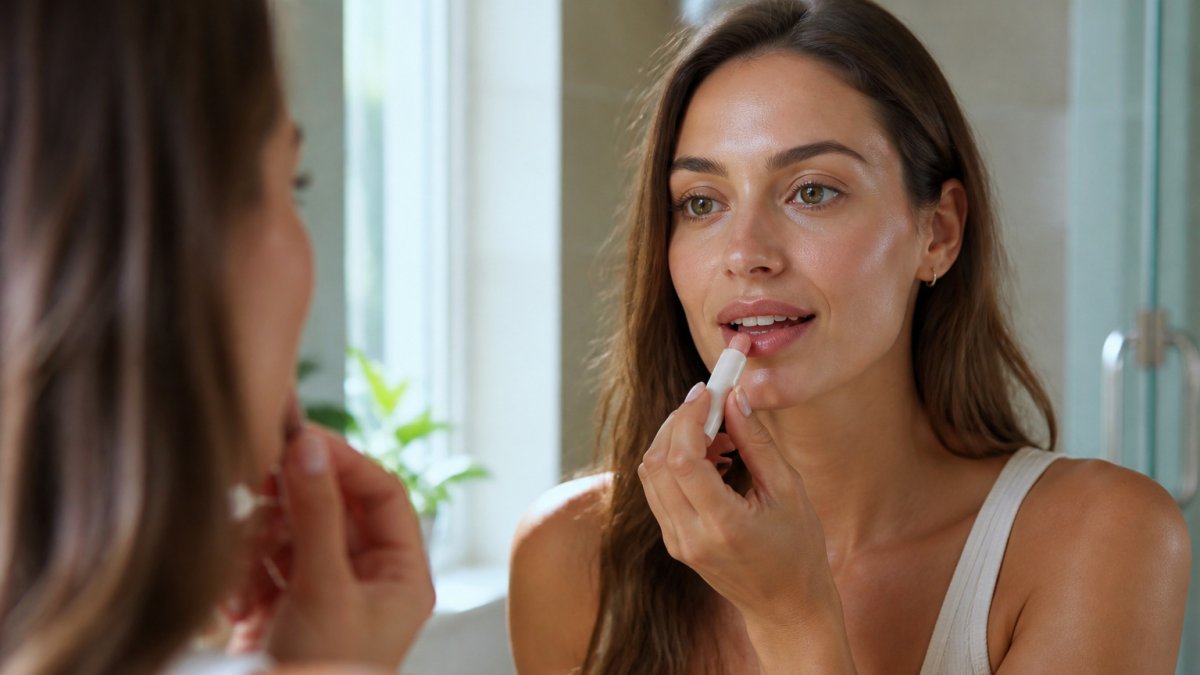
Sensitive lips need a more cautious approach. A product can be marketed as gentle and still contain ingredients that irritate some people. The safest starting point is a simple formula with few additives, but "simple" is vague, so here is what to actually look for and how to test a new balm without guessing.
The irritants most likely to cause trouble
Most reactions to tinted balms trace back to a small set of ingredients. Check the full list, not just the front of the pack:
- Fragrance and flavour. Added fragrance and flavouring are among the most common causes of contact irritation on lips. "Fragrance-free" is a stronger claim than "unscented," which can still contain masking fragrance.
- Menthol and camphor. These give a cooling tingle that many people read as "working," but on dry or cracked lips they can sting and worsen dryness.
- Essential oils. Peppermint, citrus, lavender and tea tree oils are frequent triggers even in small amounts. They often appear low on the list, but lips are thin-skinned and absorb more readily than other areas.
- Dyes and pigments. Some readers react to specific colourants. If a tinted balm stings where an untinted one does not, the dye is a reasonable suspect.
- Preservatives and emollients. Less common, but some people react to particular preservatives or to lanolin. If you have reacted to wool or lanolin products before, check for it.
How to patch-test a new tinted balm
A cautious approach many people take is a staged introduction rather than a full application on day one:
- Apply a small amount to the outer corner of one lip and leave it for 24 hours. Watch for stinging, redness or swelling.
- If there is no reaction, apply to the full lip for a few days before using it daily.
- Introduce one new product at a time. Switching several balms at once hides the cause if a reaction appears.
- Keep the packaging until you are confident, so you can compare ingredient lists if something goes wrong.
This will not catch every sensitivity, but it makes a reaction far easier to trace.
Matching the formula to your lips
- Dry or cracked lips: prioritise occlusive and humectant ingredients near the top of the list, petrolatum, shea butter, jojoba, squalane and glycerin are common examples. Avoid menthol and camphor, which can sting broken skin.
- Allergy-prone lips: start fragrance-free and flavouring-free, and keep the ingredient list short. A shorter list means fewer suspects if a reaction appears.
- Reactive to colour: choose a sheer tint over a pigmented one, and test the untinted version of the same formula first if the brand offers one.
For a deeper look at gentle formulas and the ingredients to avoid, see Safe Lip Gloss for Sensitive Skin: A 2026 Guide.
Lip Balm Ingredients to Avoid If Your Lips React Easily
Some ingredients are more likely to cause problems for sensitive lips. Menthol, camphor and strong flavourings can sting or dry the lips further. Essential oils are another common trigger, even when they appear in small amounts. Check the first few ingredients, since these make up most of the formula.
Not every reaction comes from the same source, and a dermatologist is the right person to assess a persistent problem. If a balm stings, causes redness or leaves your lips feeling worse, stop using it and consider speaking to a healthcare professional.
Tinted Lip Balm with SPF: Choosing Protection and Reapplying
Sun protection is one reason people buy tinted balms, but it is also the feature most often misunderstood. A balm with SPF protects the lips only while it is on them, and it wears off through eating, drinking and rubbing.
If you choose an SPF balm, plan to reapply it regularly during long days outdoors, and after eating or drinking. For tips on keeping a non-sticky lip gloss comfortable through the workday, see our practical guide. The label usually gives reapplication guidance, so follow that rather than relying on memory.
Finding the Right Shade Across Lip Colors and Skin Tones
A tinted balm looks different on every lip colour and skin tone, so a shade that looks lovely online may disappear or look too strong on you. Sheer tints work well for a natural look and are easier to get right. Buildable tints let you add colour gradually and stop when you like the result.
Before buying, compare the shade swatches with your own lip colour in daylight, and choose a tint that is one step deeper than your natural lip colour if you want visible colour.
For help identifying your undertone and choosing shades that flatter you, read Choosing Makeup for Your Specific Undertone: 2026 Guide.
Booking a Lauren Lux Beauty Shade Consultation Before You Buy
You can shop the Lauren Lux Beauty range to compare options in one place. Our frequently asked questions cover common questions about shipping, returns and how the products work, so you know what to expect before you commit.
Pricing for consultations and products depends on the item and delivery details, so please check the website for current prices and availability.
Frequently Asked Questions
What makes a tinted lip balm dermatologist-approved?
Dermatologist approved is a marketing phrase, not a regulated certification, so it helps to check who gave the endorsement and whether it is backed by testing or a published review. Look for the dermatologist's name or practice, whether the claim is on the product page or only in a retailer's copy, and whether a review publication explains how the product was evaluated. Treat an unsourced claim as a starting point rather than proof, and cross-check the ingredient list yourself.
Which ingredients should you avoid in tinted lip balm if you have sensitive lips?
People with sensitive lips often react to fragrance and flavoring, certain essential oils, menthol, camphor and some preservatives. Pigments and dyes can also irritate, so a shorter ingredient list with a sheer tint is often easier to tolerate. Patch test a new balm on a small area of lip for a few days before using it daily, and stop if you notice stinging, swelling or peeling.
Is tinted lip balm with SPF better for everyday use?
For daytime wear outdoors, a tinted balm with SPF gives you color and sun protection in one step, which many people find easier to remember than separate products. Check that the label lists broad-spectrum protection and an SPF value. Reapply after eating, drinking or prolonged time outside, since most of the protection wears off with friction and food.
Can you wear tinted lip balm every day?
Yes, most people can use a tinted balm daily, provided the formula does not cause irritation. Lightweight, sheer tints with hydrating ingredients are generally suited to everyday wear. If your lips become dry, flaky or sore with regular use, pause the product, moisturize with a plain balm and consider a formula with fewer added ingredients.
