
Table of Contents
- Why Your Undertone Matters More Than Your Skin Tone
- How to Identify Your Skin Undertone
- How to Choose Foundation Undertone That Actually Matches
- Makeup for Warm Undertones: Gold, Peach, and Bronze
- Makeup for Cool Undertones: Pink, Berry, and Blue-Red
- Neutral and Olive Undertones: The Middle Ground
- Building a Full Routine Around Your Undertone
- Conclusion: Your Undertone, Your Rules
- Frequently Asked Questions
Last Updated: October 7, 2026
Why Your Undertone Matters More Than Your Skin Tone
Choosing makeup for your specific undertone is the difference between foundation that disappears into your skin and foundation that sits on top of it like a mask, which is why choosing makeup for your specific undertone matters more than shopping by depth alone.
Most people shop by skin tone, the light-to-dark depth of their complexion. That is only half the equation: two women can share the same depth and still need completely different shades.
Below, we break down how to identify your undertone, how to choose foundation undertone that actually matches, and which shades flatter each category.
Undertone vs. Overtone: What's the Difference?
Undertone is the permanent color beneath your skin; overtone is the surface color you see first. Undertone stays constant, while overtone shifts with sun exposure, hydration, hormones, and weather.
That is why a foundation can look perfect in the store and wrong three hours later. You matched your overtone, not your undertone.
Think of your overtone as the veil and your undertone as the light behind it.
How to Identify Your Skin Undertone
The fastest way to identify your skin undertone is three tests in natural daylight: the vein test, the jewelry test, and the white-paper test. No single test is conclusive, so compare all three.
Here is the practical process we recommend:
- Do it in daylight. Stand near a window around midday; indoor bulbs and phone screens distort color.
- Run the vein test. Look at the veins on your inner wrist.
- Run the jewelry test. Hold gold and silver pieces against your face, one at a time.
- Run the white-paper test. Hold a plain white sheet beside your bare face and note whether your skin reads yellow, pink, or gray.
- Compare all three results. If two or three agree, you have your answer. If they conflict, you may be neutral or olive.
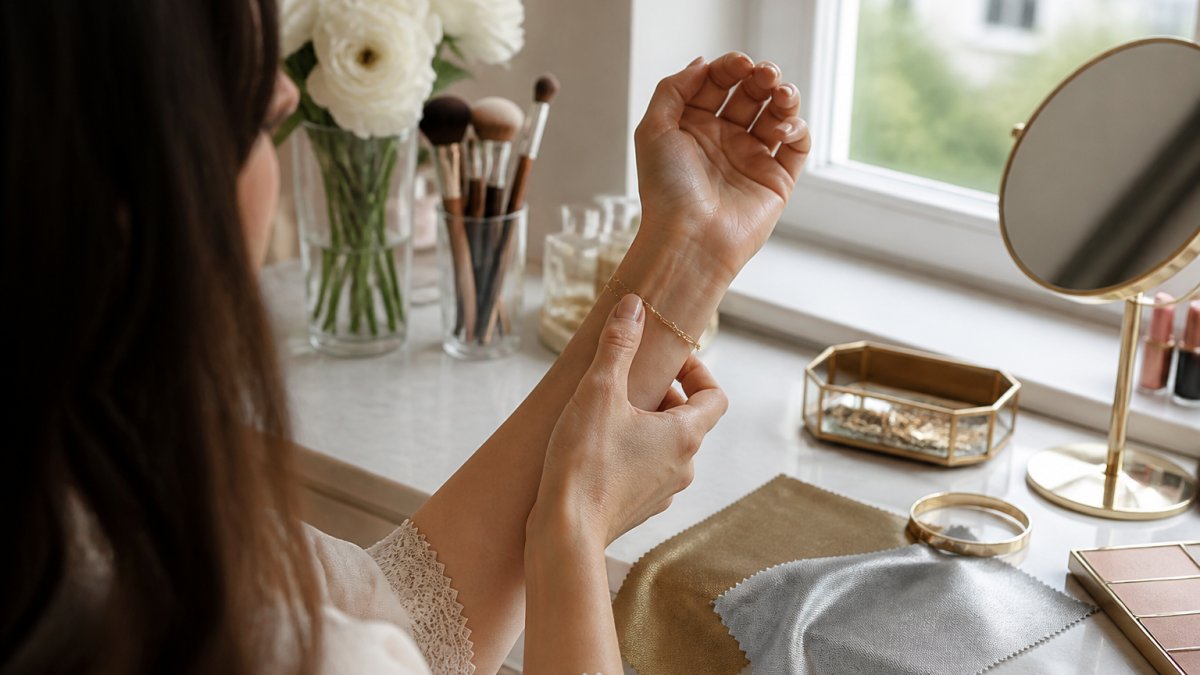
The Vein Test and Jewelry Test
The vein test works because your blood vessels sit beneath layers of skin, so their apparent color is filtered through your undertone.
The jewelry test is equally telling. According to guidance from beauty and color theory resources at Britannica, complementary colors sit opposite each other on the color wheel, which is why warm gold flatters warm skin and cool silver flatters cool skin.
Olive and Mixed Undertones: When Tests Conflict
Olive undertones are the most misdiagnosed category, and far more common than most shade ranges suggest. Olive skin carries a green or gray cast between warm and cool, so the vein test often shows green veins while the jewelry test favors silver.
If your tests contradict each other, do not force yourself into a warm or cool box. Look for foundations described as neutral, neutral-warm, or olive.
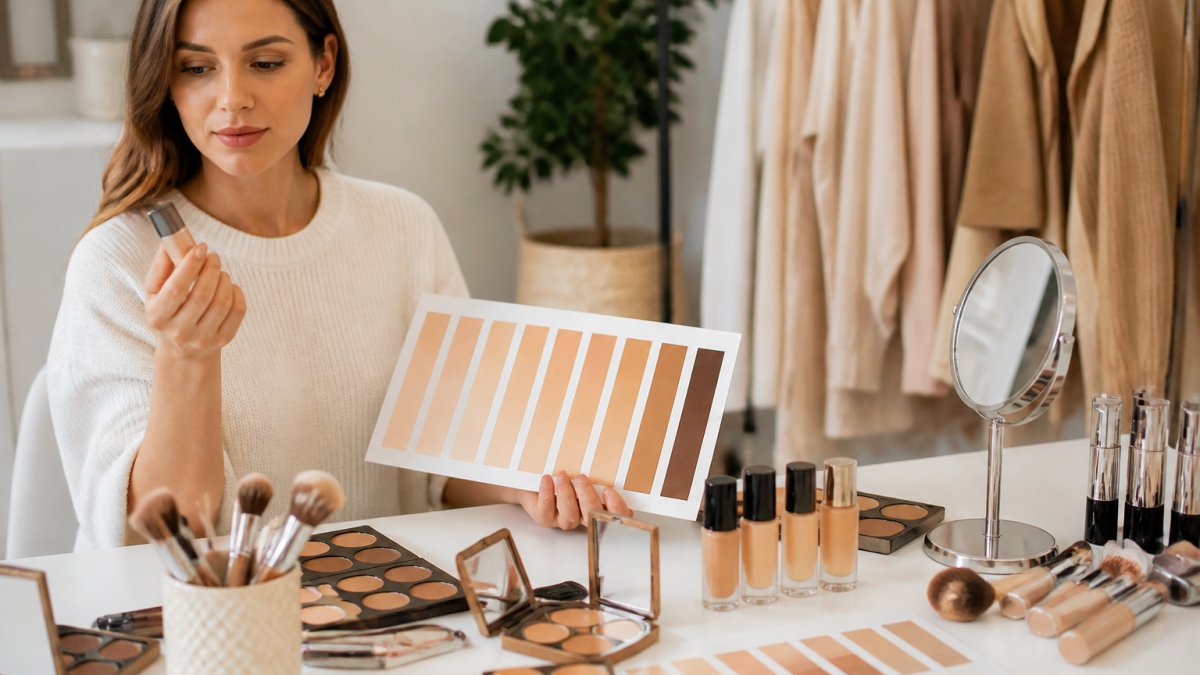
How to Choose Foundation Undertone That Actually Matches
Here is a repeatable process:
- Start bare-faced. Moisturizer, sunscreen, and primer shift how foundation reads; if you always wear primer, test with it on.
- Swatch three candidates at once: one warm, one cool, one neutral, all at your depth. If you suspect olive, add a fourth olive-labeled shade.
- Apply in vertical stripes from your jawline down onto your neck, not on the back of your hand, which is a different depth and often a different undertone than your face.
- Step outside and check in natural daylight before committing. If you cannot leave the store, walk to a doorway or window.
- Wait 20 minutes, then reassess. Oxidation, the reaction between foundation pigments and the air and oils on your skin, typically deepens or warms the shade, so a foundation that looks perfect at minute one can look orange at minute twenty.
- Compare face to neck, not face to arm. The goal is a seamless transition from jaw to chest; if you can see a line where the foundation stops, the undertone or depth is off.
- Photograph your face, not your arm, in daylight and view it on a different screen. Cameras and screens shift color, so treat the photo as a second opinion, not a verdict.
The shade that vanishes into your jawline and neck is your match. The color science overview from the Encyclopaedia Britannica explains how hue and value interact, which is exactly what you are balancing when you match a base.
Why oxidation matters. Oxidation is not a defect, it is a normal reaction that happens to nearly every liquid and cream foundation.
Why neck comparison matters. Many people have a face slightly pinker or warmer than their neck due to sun exposure, exfoliation, or natural redness.
Why lighting matters. Fluorescent bulbs add a green or blue cast. Incandescent bulbs add yellow.
A note on olive and mixed undertones. If every foundation pulls either too pink or too yellow on you, you are probably olive or a mixed undertone. Standard warm/cool/neutral ranges often skip these categories, so look for brands that publish olive or neutral-olive labels and test those alongside your other swatches. Do not buy a warm foundation to "fix" a sallow look, it will only turn the skin orange.
Makeup for Warm Undertones: Gold, Peach, and Bronze
Warm undertones glow in gold, peach, bronze, and coral. Your skin carries yellow, golden, or peach tones, and your veins lean green. Yellow or orange bases melt into your coloring, while blue-based pinks and berries can look jarring.
For a warm undertone makeup routine, build around:
- Foundation and concealer: yellow, golden, or peach bases
- Blush: peach, coral, apricot, and warm terracotta
- Lipstick: warm nude, brick red, coral, and peachy pink
Warm colors are your default. A cream blush in soft peach gives a polished, everyday glam finish without looking heavy, and layers beautifully over a golden-base foundation.
Makeup for Cool Undertones: Pink, Berry, and Blue-Red
Cool undertones come alive in pink, berry, blue-red, and plum. Your skin carries pink, red, or blue tones, and your veins lean blue or purple. Blue-based shades brighten your complexion, while orange-based colors can turn it sallow.
For cool undertone makeup, choose:
- Foundation and concealer: pink or rosy bases
- Blush: cool pink, rose, and soft berry
- Lipstick: blue-red, mauve, cool plum, and true pink
If warm bronzer makes you look muddy, switch to a cooler contour. Cool colors sharpen your features rather than warming them, which reads as polished rather than sun-kissed.
Neutral and Olive Undertones: The Middle Ground
Neutral undertones sit between warm and cool and can wear shades from both palettes. Olive undertones are a subset of neutral that leans green or gray, and they need special handling because most mainstream shades skip them entirely.
For neutral and olive skin:
- Foundation: neutral, neutral-warm, or true olive bases
- Blush: dusty rose, soft mauve, muted peach, and warm nude
- Lipstick: rosewood, muted berry, and brown-pink
The trap for olive skin is saturation: highly pigmented warm or cool shades can overwhelm the complexion, so muted, desaturated colors usually flatter more.
| Undertone | Vein Color | Jewelry | Best Blush | Best Lipstick |
|---|---|---|---|---|
| Warm | Green | Gold | Peach, coral | Brick red, warm nude |
| Cool | Blue, purple | Silver | Rose, berry | Blue-red, mauve |
| Neutral | Blue-green mix | Both | Dusty rose | Rosewood, brown-pink |
| Olive | Green, gray | Silver often | Muted mauve | Muted berry |
Building a Full Routine Around Your Undertone
Most guides stop at foundation, but undertone affects every layer of a routine. Use the table below as your shopping shortcut, then read the notes underneath for the trade-offs a table cannot capture.
| Product | Warm | Cool | Neutral | Olive |
|---|---|---|---|---|
| Foundation | Yellow, golden, peach base | Pink, rosy, blue base | Balanced neutral or neutral-warm | Green or gray base, often labeled olive |
| Concealer | One shade lighter, same warm base | One shade lighter, same cool base | Same depth or one lighter, neutral | Same depth, olive or neutral base |
| Bronzer | Golden or honey, never ash | Rose-bronze or cool taupe, used sparingly | Neutral bronze, no orange | Neutral bronze, no red or orange |
| Contour | Warm taupe | Cool taupe or gray-brown | Soft neutral taupe | Gray-brown or muted taupe |
| Blush | Peach, coral, apricot, terracotta | Cool pink, rose, soft berry | Dusty rose, soft mauve | Muted mauve, dusty rose, warm nude |
| Lipstick | Brick red, warm nude, coral, peachy pink | Blue-red, mauve, cool plum, true pink | Rosewood, brown-pink, muted berry | Muted berry, rosewood, brown-pink |
| Eyeshadow | Bronze, copper, gold, warm brown | Taupe, charcoal, silver, cool mauve | Bronze, taupe, muted plum | Bronze, taupe, muted plum |
A few mechanics worth understanding, because they explain why the table works:
- Contour vs. bronzer is not the same job. Bronzer adds warmth on the high points of the face; contour creates shadow in the hollows. Too-warm contour reads as dirt, too-cool bronzer reads as bruise. Match each to its purpose, not just your undertone.
- Concealer undertone matters more than depth. A concealer one shade too light in the wrong undertone flashes gray or orange under the eyes. Stay in your undertone family and adjust depth by half a shade at a time.
- Blush and lipstick should echo, not match. A peachy blush with a brick-red lip reads intentional; with a blue-red lip it reads like two different people did your makeup.
Lighting, tanning, and skin changes. Undertone is generally stable across your lifetime, but surface tone shifts with sun exposure, hormones, hydration, and the seasons, so your depth may change while your undertone does not.
Inclusive shade-range note. Undertone is not determined by skin depth: a person with deep skin can be cool, warm, neutral, or olive, and a person with fair skin can be any of those too. If a brand only offers warm shades in deep depths and cool shades in fair depths, that is a range problem, not a you problem. Look for brands that publish undertone labels (warm, cool, neutral, olive) alongside depth numbers, and treat any range that skips olive entirely as incomplete rather than as evidence that you are not olive.
Conclusion: Your Undertone, Your Rules
The rules above are a starting point, not a cage.
Undertone tests are clues, not verdicts: use them to narrow your options, then trust your eye in daylight.
At Lauren Lux Beauty™, we built our soft luxury range for exactly this kind of intentional routine.
Shop Lauren Lux Beauty™ and build a polished, everyday glam look that lasts from morning to candlelight.
Frequently Asked Questions
How do I figure out my undertone for makeup?
Start with the vein test: look at the veins on your inner wrist in natural daylight. Blue or purple veins suggest a cool undertone, green veins point to warm, and a mix of both indicates neutral. The jewelry test works too: if gold flatters your skin, you lean warm; if silver looks better, you lean cool. If both work equally well, you are likely neutral. For olive or mixed undertones, these tests can conflict, so compare a few foundations on your jawline in daylight before deciding.
How can I tell whether my undertone is warm, cool, or neutral?
Compare how your skin reacts to gold versus silver jewelry, check your wrist veins in daylight, and notice whether warm peach or cool pink shades tend to flatter your face. Warm undertones usually have golden, yellow, or peach casts. Cool undertones show pink, red, or blue casts. Neutral undertones sit between the two, and both gold and silver tend to suit them. Testing a few shades on your jawline in natural light gives the clearest answer.
How do I choose a foundation shade that matches my undertone?
Swatch two or three foundation shades along your jawline, not your hand, and step into natural daylight to compare. The correct match disappears into your skin without looking ashy, orange, or pink. If your neck and face look like two different colors, the undertone is off. For olive undertones, look for foundations labeled neutral or olive rather than strictly warm or cool. Always let the foundation settle for a few minutes before judging the match.
Which lipstick colors suit my undertone?
Warm undertones look best in peach, coral, warm nude, brick, and terracotta shades. Cool undertones flatter berry, plum, mauve, and blue-based reds. Neutral undertones can wear most shades, including soft rose and true red. Olive undertones often suit muted berries, warm mauves, and brown-based nudes. If a lipstick makes your teeth look yellow or your skin look grey, the undertone is working against you. A high-shine gloss in a complementary shade can also soften a color that feels too strong.
Can people with sensitive skin use makeup matched to their undertone?
Yes. Undertone matching is about color, not formula, so sensitive skin can still find flattering shades. Look for fragrance-free, non-sticky formulas with short ingredient lists, and patch test new products on your inner arm for 24 hours before applying to your face. Cream blushes and lightweight glosses tend to be gentler than heavy powders. If a product causes redness or irritation, stop using it and check the ingredient list for common triggers like synthetic fragrance or certain preservatives.
What is the rarest undertone?
Olive undertones are often considered the rarest and the hardest to classify, because they can appear warm, cool, or neutral depending on lighting and skin depth. Olive skin has a subtle green or grey cast that does not fit neatly into warm or cool categories. This is why many olive-toned people struggle to find foundation matches. If your undertone tests give conflicting results, you may have olive or mixed undertones, and neutral or olive-labeled foundations are usually the best starting point.
Can lighting change how my undertone looks?
Yes. Warm indoor lighting can make cool undertones look warmer, and cool fluorescent light can make warm undertones look sallow. Natural daylight is the most accurate for shade matching. Tanning also shifts your surface tone, but your undertone stays the same, so a foundation that matched in winter may look off in summer. Always re-swatch in daylight after any significant change in sun exposure, and keep a slightly lighter and slightly deeper shade on hand for seasonal shifts.