
Last Updated: October 30, 2026
Quick Summary
A flattering lip gloss shade works with your natural coloring rather than against it, matching your skin undertone, depth, and existing lip pigment. Start by identifying whether you are warm, cool, or neutral using the vein and jewelry tests.
- Check wrist veins in daylight: greenish veins suggest warm, blue or purple suggest cool.
- Gold jewelry that makes you glow points to warm; silver that looks brighter points to cool.
- The more opaque the gloss, the more precisely it must match your undertone.
- Test shades on bare lips in natural daylight, not just on the back of your hand.
- Use the half-face test: the flattering shade makes that side look more awake and even.
Table of Contents
- Why Some Lip Gloss Shades Flatter and Others Fade You Out
- Find Your Undertone: Warm, Cool or Neutral
- Matching Lip Gloss Shades to Your Skin Tone and Depth
- Adjusting Shade Choice for Pigmented and Natural Lip Color
- Texture, Opacity and How Age Changes Your Lips
- Testing Shades Before You Commit and Choosing for Each Occasion
- Booking Your Shade Consultation with Lauren Lux Beauty
- Frequently Asked Questions
Why Some Lip Gloss Shades Flatter and Others Fade You Out
Lip gloss is one of the most forgiving makeup products, yet many people still reach for a flattering lip gloss shade that doesn't make them look washed out or tired.
The short answer: a flattering lip gloss shade works with your natural coloring instead of competing against it.
Here's what most people miss. A gloss can be beautiful in the tube and still disappear on you.
Below, we'll show you exactly how to identify your undertone, match shades to your depth, and test before you buy.
Find Your Undertone: Warm, Cool or Neutral
An undertone is the subtle hue beneath your skin's surface. It is separate from your overall tone, which is how light or deep your skin looks. Undertones fall into three groups: warm (golden, peachy), cool (pink, red, or blue-toned), and neutral (a balance of both).
Your undertone is the single biggest factor in choosing a flattering gloss. For a deeper, step-by-step guide to identifying your undertone across all makeup categories, read Choosing Makeup for Your Specific Undertone.
The Vein Test and Jewelry Test
Two quick checks help you narrow it down:
- The vein test: Look at the veins on your inner wrist in natural daylight. Greenish veins usually signal a warm undertone. Blue or purple veins usually signal a cool one. A mix suggests neutral.
- The jewelry test: Hold gold jewelry, then silver, against your bare skin. Gold that makes you glow points to warm. Silver that looks brighter points to cool.
A common mistake is relying on the vein test under indoor, yellow lighting. Step near a window first.
Lip Gloss Shades for Warm Undertones
If you're warm-toned, look for:
- Peach and apricot glosses that brighten without looking orange
- Warm nudes with caramel or honey notes
- Coral and terracotta shades for a healthy flush
Avoid icy pinks and blue-based berries, which can make warm skin look dull.
Lip Gloss Shades for Cool Undertones
If you're cool-toned, look for:
- Rose and mauve glosses that enhance natural pink
- Berry and plum shades for depth
- Cool nudes with pink or taupe bases
Steer clear of orange-based peaches, which can look muddy on cool skin.
The article's quick checks and shade picks by undertone, summarised for easy scanning.
| Undertone | Test or sign | Shades that flatter |
|---|---|---|
| Warm | Greenish wrist veins; gold jewelry looks best | Peach, apricot, warm nudes, coral, bronze |
| Cool | Blue or purple wrist veins; silver looks brighter | Rose, mauve, berry, plum, cool nudes, pearl |
| Neutral | Mix of green and blue veins | Balance of warm and cool shades |
| Warm (avoid) | Icy pinks and blue-based berries | Can look dull on warm skin |
| Cool (avoid) | Orange-based peaches | Can look muddy on cool skin |
Matching Lip Gloss Shades to Your Skin Tone and Depth
Undertone tells you the color family. Depth tells you the intensity. Fair, medium, and deep skin each have shades that flatter best.
- Fair skin: Sheer, light glosses in soft pinks and peaches keep the look fresh. Heavy dark shades can overpower.
- Medium skin: Most shades work well. Mid-tone rose, coral, and warm nudes add dimension.
- Deep skin: Rich berries, deep plums, and bold corals show up beautifully. Light, pale glosses can disappear.
Lip gloss shades for skin tone are easiest to judge by swatching. A shade that looks right on the packaging may read differently on your lips.
Adjusting Shade Choice for Pigmented and Natural Lip Color
Your natural lip color changes how a gloss looks. Pigmented lips, which are naturally darker, need more coverage or deeper shades to avoid looking washed out. Lighter natural lips often look best with sheer, lighter glosses.
- Pigmented lips: Choose glosses with more opacity, or layer a deeper shade over a sheer one.
- Natural lips: Sheer glosses build color gently. Tinted balms or rose shades keep the look soft.
- Lip gloss for pigmented lips: Warm berries and rich mauves tend to show up clearly without looking heavy.
Watch out: a very pale gloss on dark lips can look ashy, so test on the lips themselves.
Texture, Opacity and How Age Changes Your Lips
Lip gloss is often treated as a single category, but texture and opacity also shape whether a shade flatters you. A gloss can be the "right" color on paper and still look wrong because of how much pigment it delivers and how much light it reflects.
How Opacity Changes the Shade on Your Lips
Opacity describes how much of your natural lip color shows through the gloss. Think of it as a dial:
- Sheer gloss (low opacity): Your natural lip color does most of the work. The gloss adds a tint and shine. This is the most forgiving category because your own undertone and pigmentation blend with the shade. A sheer warm peach on cool lips may read as a soft coral rather than a true peach.
- Medium opacity: The gloss contributes roughly half the final color. This is where undertone clashes become visible, a blue-based berry at medium opacity can turn muddy on warm skin, while a warm caramel nude can look orange on cool skin.
- Opaque gloss (high opacity): The gloss replaces your natural lip color almost entirely. Now the shade's undertone and depth dominate, so you must match it more precisely to your skin's undertone and contrast level. Opaque gloss behaves more like a liquid lipstick and is less forgiving of a mismatch.
A practical rule: the more opaque the gloss, the more important the undertone match. If you are unsure of your undertone, start with sheer formulas where your natural lip color acts as a buffer.
Finish matters too. A high-shine gloss reflects light and makes any shade look brighter and more saturated, a sheer berry can read almost like a stain in direct light.
How Age Changes What Flatters
Lips change with age in ways that affect gloss choice. Volume loss, thinner skin, and more visible vertical lines are common. These changes do not mean you must avoid gloss, they mean you should adjust texture and opacity.
- Fine lines and texture: Very high-shine, thin formulas can settle into vertical lines and make them more noticeable. A cushiony, moisture-rich gloss with a satin or soft-shine finish can look smoother because it blurs rather than mirrors texture.
- Natural pigmentation shifts: Lips often become paler or more uneven with age. A sheer gloss may no longer deliver enough color on its own. Medium-opacity glosses in rose, mauve, or soft berry can restore definition without looking heavy.
- Volume perception: Gloss placed at the center of the lower lip and just below the cupid's bow can reflect light and create a fuller look.
Shades that felt flattering in your twenties may read as harsh or washed out later, as lips' natural color and texture change. Re-test your go-to shades every few years rather than assuming the same tube still works.
Testing Shades Before You Commit and Choosing for Each Occasion
Testing a gloss on the back of your hand is a start, but it is not enough. You can learn about trying products and returns before buying on our Frequently Asked Questions page. Hand skin is a different color and texture from your lips, and gloss looks different once it mixes with your natural lip pigment. Use a structured test instead.
A Four-Step Gloss Test That Actually Predicts Flattery
- Swatch on the lip, not just the hand. Apply a thin layer to your bare lips (or over a lip balm if that is how you normally wear gloss). Check in natural daylight near a window. Then check again under the indoor lighting where you spend most of your day, office fluorescents and warm restaurant bulbs change how a shade reads.
- Do the half-face test. Apply the candidate gloss to one half of your lips and leave the other half bare or with your current go-to shade. Step back from the mirror. The flattering shade makes that side of your face look more awake and even; the wrong shade makes it look tired, sallow, or washed out.
- Check the contrast. Squint at your reflection. A flattering gloss sits in a similar contrast range to your skin and hair, it does not disappear completely, and it does not overpower your features. If the gloss is the first thing you see before your eyes, it is likely too high-contrast for everyday wear.
- Wear it for an hour. Gloss changes as it warms and settles. A shade that looks right on application can turn patchy or too sheer once it mixes with your lip's natural oils. If possible, ask for a sample or buy from a retailer with a generous return policy.
Matching the Shade to the Occasion
Occasion affects both shade and finish. The same gloss can feel right at brunch and wrong at a black-tie event.
- Workplace and daytime: Sheer nudes, soft roses, and clear high-shine glosses read polished without drawing attention. A satin finish is often more professional than a wet-look shine.
- Daytime events and weekends: Peach, coral, and warm pink glosses feel fresh. This is the safest place to experiment with a slightly brighter shade than your everyday nude.
- Evenings and formal events: Deeper berries, plums, and shades with shimmer or metallic particles add drama. Higher opacity works better here because it holds up under dim lighting and photographs more predictably.
A Simple Self-Assessment to Narrow Your Shortlist
If you are overwhelmed by options, answer these three questions before you shop:
- What is my undertone? Warm, cool, or neutral (use the vein and jewelry tests above).
- How pigmented are my natural lips? Light, medium, or deep. This tells you whether you need sheer or medium opacity.
- What is my contrast level? Low contrast (hair, skin, and eyes are similar in depth) suits softer, sheerer shades. High contrast (dark hair and light skin, or vice versa) can carry deeper, more saturated glosses.
Your answers point to a narrow shade family, for example, cool undertone + light lips + low contrast points to sheer rose or mauve.
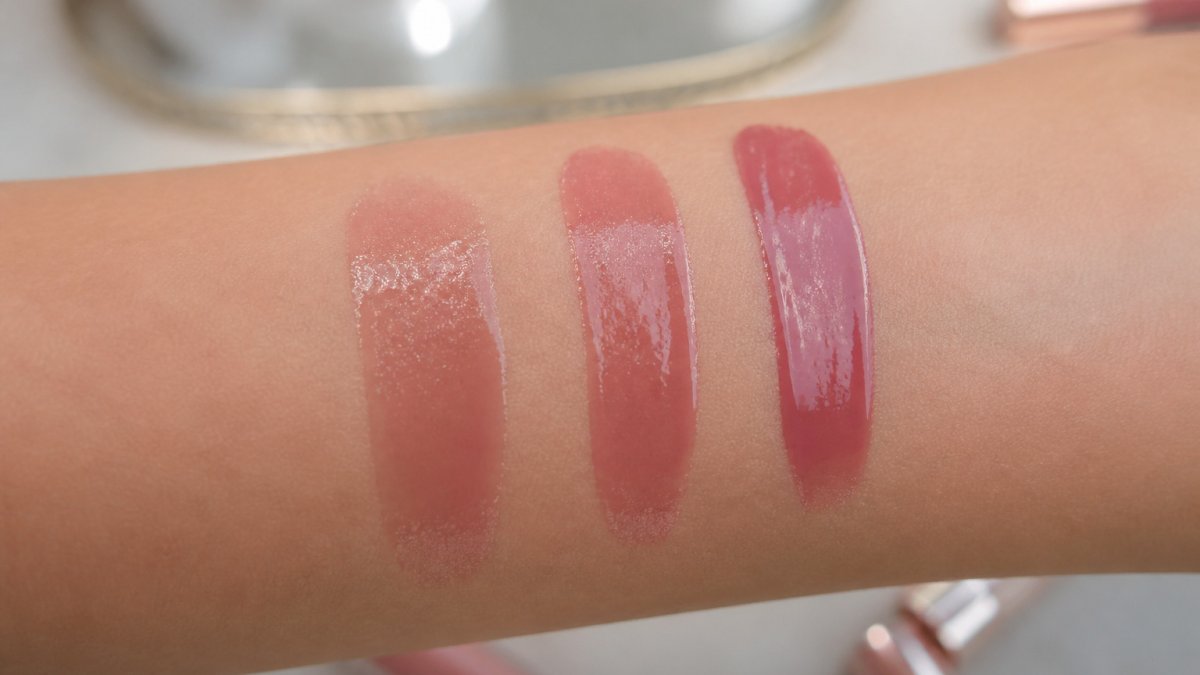
!Close-up of a woman's hand swatching a glossy nude-pink shade on the back of her wrist beside a mirror on a bright vanity table
Lip gloss shades for skin tone are only part of the picture, which is why testing matters.
If you'd like to try shades before you commit, shop Lauren Lux Beauty to browse the collection.
Booking Your Shade Consultation with Lauren Lux Beauty
Still unsure which shade suits you? Get in touch with Lauren Lux Beauty with any questions about choosing a shade.
Finding your perfect gloss shade is a skill you build over time, and the right match should feel effortless every day.
Frequently Asked Questions
How do I know what color lip gloss to wear?
Start with your undertone, then check your natural lip color. Warm undertones usually suit peach, coral and warm brown glosses, while cool undertones tend toward berry, mauve and rose. If your lips are naturally deep or pigmented, pick a gloss a shade or two lighter or more sheer than you think you need, because a gloss over darker lips reads darker than it looks in the tube. Swatch two or three shades in daylight before deciding.
Which lip gloss shades are most flattering for warm undertones?
Shades with golden, peachy or terracotta notes tend to flatter warm undertones. Caramel nudes, warm coral and soft bronze-rose glosses blend with skin rather than contrasting with it. A high-shine finish in these tones looks polished for everyday wear without looking heavy, and it suits the professional, soft-glam look many women want at work.
Which lip gloss shades suit cool undertones?
Cool undertones usually look best with mauve, rose, berry and clear-pink glosses. These shades echo the blue or pink tones in your skin. Avoid very orange or brick shades, which can look muddy against cool skin. A sheer rose-mauve with a mirror finish gives a polished, effortless result that works for both the office and evening.
How can I test a lip gloss shade before buying it?
Swatch the gloss on the back of your hand or inner wrist first, then check it in natural daylight and next to your face. Compare it with your natural lip color, since a sheer gloss will show your lips underneath while a denser one will cover them. If you buy online, look for shade descriptions that mention undertone and finish, and check the return policy before you order.
